
SIP vs FD: Which Investment is Better in 2026? A Complete Guide for Beginners

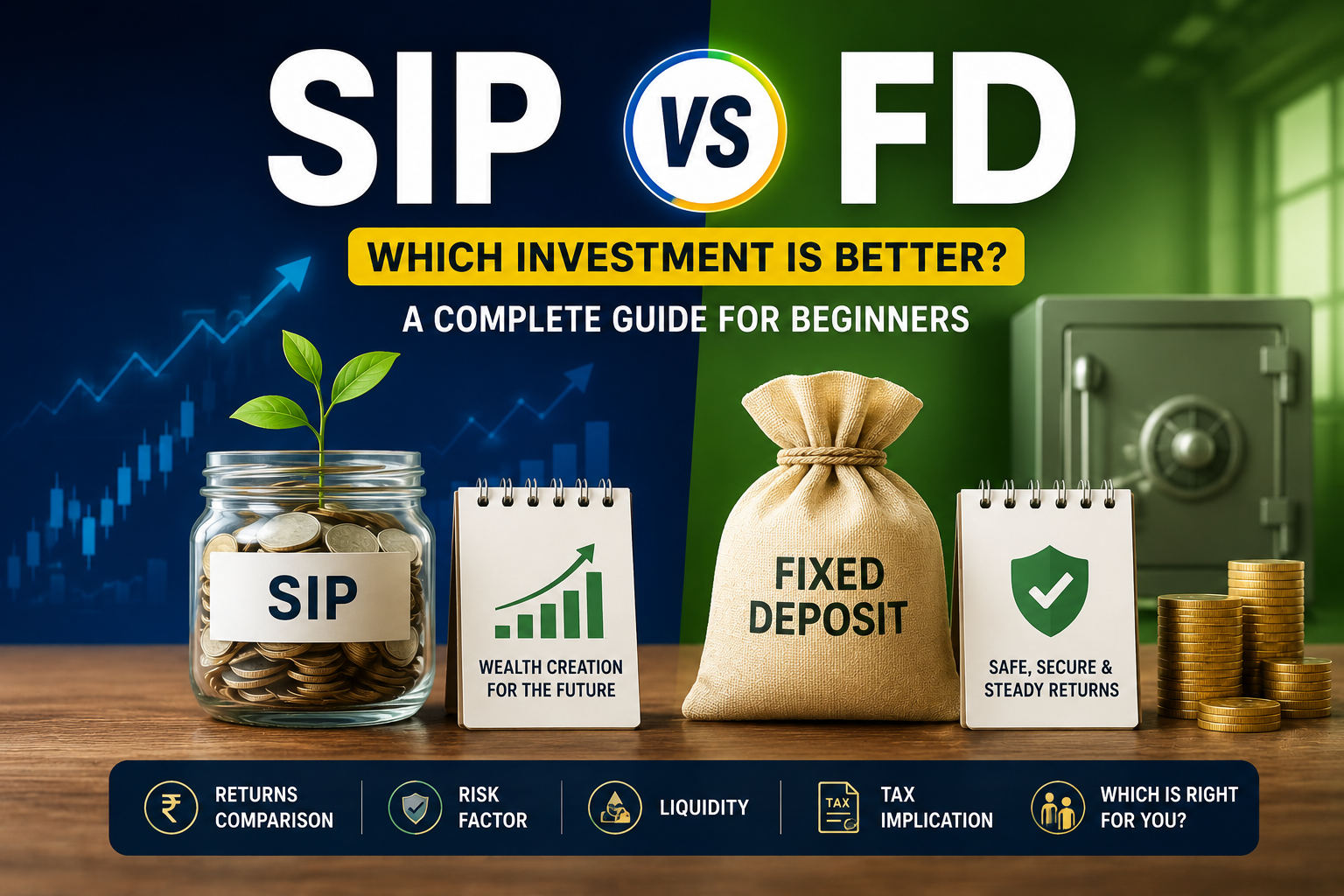
SIP vs FD: Which Investment is Better?
When people start investing, one of the biggest questions they ask is:
Should I invest in a SIP or put my money in a Fixed Deposit (FD)?
Both are popular investment options in India, but they serve different purposes. Understanding their differences can help you choose the right option based on your financial goals.
In this guide, we'll compare SIP vs FD in simple language.
What is SIP?
A Systematic Investment Plan (SIP) is a way to invest a fixed amount regularly in a mutual fund.
Instead of investing a large amount at once, you can invest monthly.
Benefits of SIP
Start with as little as ₹500
Potential for long-term wealth creation
Power of compounding
Professionally managed funds
Suitable for long-term investors
What is a Fixed Deposit (FD)?
A Fixed Deposit (FD) is a savings product offered by banks and financial institutions where you deposit money for a fixed period and earn a predetermined rate of interest.
Benefits of FD
Stable and predictable returns
Low investment risk
Fixed tenure options
Easy to understand
Suitable for conservative investors
SIP vs FD: Key Differences
| Feature | SIP | Fixed Deposit |
|---|---|---|
| Returns | Market-linked (not guaranteed) | Fixed interest rate |
| Risk | Moderate (varies by fund) | Generally low |
| Wealth Creation | Better potential over the long term | Steady but usually lower growth |
| Inflation Impact | May outpace inflation over long periods | Inflation can reduce real returns |
| Investment Amount | From ₹500 | Depends on bank |
| Liquidity | Depends on fund type | May involve penalties for early withdrawal |
| Suitable For | Long-term goals | Short-term stability |
Which Investment Gives Better Returns?
Historically, diversified equity mutual funds have often delivered higher long-term returns than fixed deposits, but past performance does not guarantee future results.
FDs offer certainty, while SIP returns fluctuate with market performance.
If your goal is:
Long-term wealth creation → SIP may be more suitable.
Capital protection and predictable income → FD may be more suitable.
SIP Advantages
1. Compounding
Investing regularly over many years can significantly increase wealth through compounding.
2. Rupee Cost Averaging
By investing at regular intervals, you buy more units when prices are low and fewer when prices are high.
3. Flexibility
You can usually increase, decrease, pause, or stop SIPs depending on the platform and fund rules.
FD Advantages
1. Predictable Returns
You know the interest rate before investing.
2. Lower Volatility
FD values do not fluctuate with the stock market.
3. Ideal for Emergency Savings
Suitable for people who want capital stability over higher growth potential.
Who Should Choose SIP?
SIP may be suitable if you:
Want long-term wealth creation
Can tolerate market fluctuations
Are investing for goals such as retirement or education
Can invest regularly every month
Who Should Choose FD?
FD may be suitable if you:
Prefer stable returns
Have a short-term financial goal
Want lower investment risk
Need predictable income
Can You Invest in Both?
Yes.
Many financial planners recommend combining both.
For example:
Keep your emergency fund in an FD.
Invest monthly in SIPs for long-term goals.
This can help balance stability and growth.
Common Mistakes to Avoid
Investing without a financial goal
Expecting guaranteed returns from SIPs
Ignoring inflation while choosing investments
Withdrawing long-term investments too early
Investing only because others recommend it
Frequently Asked Questions
Is SIP safer than FD?
FDs generally involve lower investment risk. SIPs invest in mutual funds, so returns depend on market performance and can fluctuate.
Can I lose money in SIP?
Yes. Since SIPs invest in market-linked funds, their value can go up or down.
Which is better for beginners?
If you are comfortable with market risk and have long-term goals, SIPs can be a good starting point. If you prioritize stability, an FD may suit you better.
Can I invest in SIP and FD together?
Yes. Many investors use both to diversify their savings and investments.
Final Verdict
There is no single investment that is best for everyone.
Choose SIP if your goal is long-term wealth creation and you can stay invested through market ups and downs.
Choose FD if you value capital stability and predictable returns.
The right choice depends on your financial goals, investment horizon, and risk tolerance.
SEO Keywords
SIP vs FD
SIP or Fixed Deposit
Best Investment in India
Mutual Fund vs FD
SIP Benefits
Fixed Deposit Guide
Long-Term Investment
Personal Finance
Wealth Creation
Investment for Beginners